Choosing resources for the AUR training package.
A workshop guide for RTOs delivering automotive qualifications: what the package covers, how a qualification is put together, how to keep it current, and what any resource can and cannot do for you.
What the package covers
The Automotive Retail, Service and Repair training package, known by its code AUR, holds the national qualifications for people who sell, service and repair vehicles and powered equipment. Its current qualifications run from Certificate I to Diploma. Read their titles and the range is wide: light vehicle mechanical work, heavy commercial vehicles and trailers, diesel engines and fuel systems, mobile plant and agricultural machinery, electrical and electric vehicle technology, body repair, refinishing, glazing and trimming, tyres, underbody and accessory fitting, motorcycles and bicycles, outdoor power equipment, marine mechanical work, motor sport, sales, administration, loss assessing and management.
The full current list is on this site. The authority is training.gov.au, the national register, and its entry for each qualification is the one to trust.
How a qualification is packaged
A qualification is not a fixed list of subjects. Each one has packaging rules, published on training.gov.au, that set how many units a learner completes, which core units everyone must complete, and where electives can be chosen from. Electives may come from a list inside the qualification, from elsewhere in AUR, or from another training package, within the limits the rules allow. Some units also have prerequisite units that must be completed first.
So the resources you need depend on the units you choose. Settle your unit selection against the packaging rules first, then buy for that selection. The training and assessment strategy is where that choice is recorded.
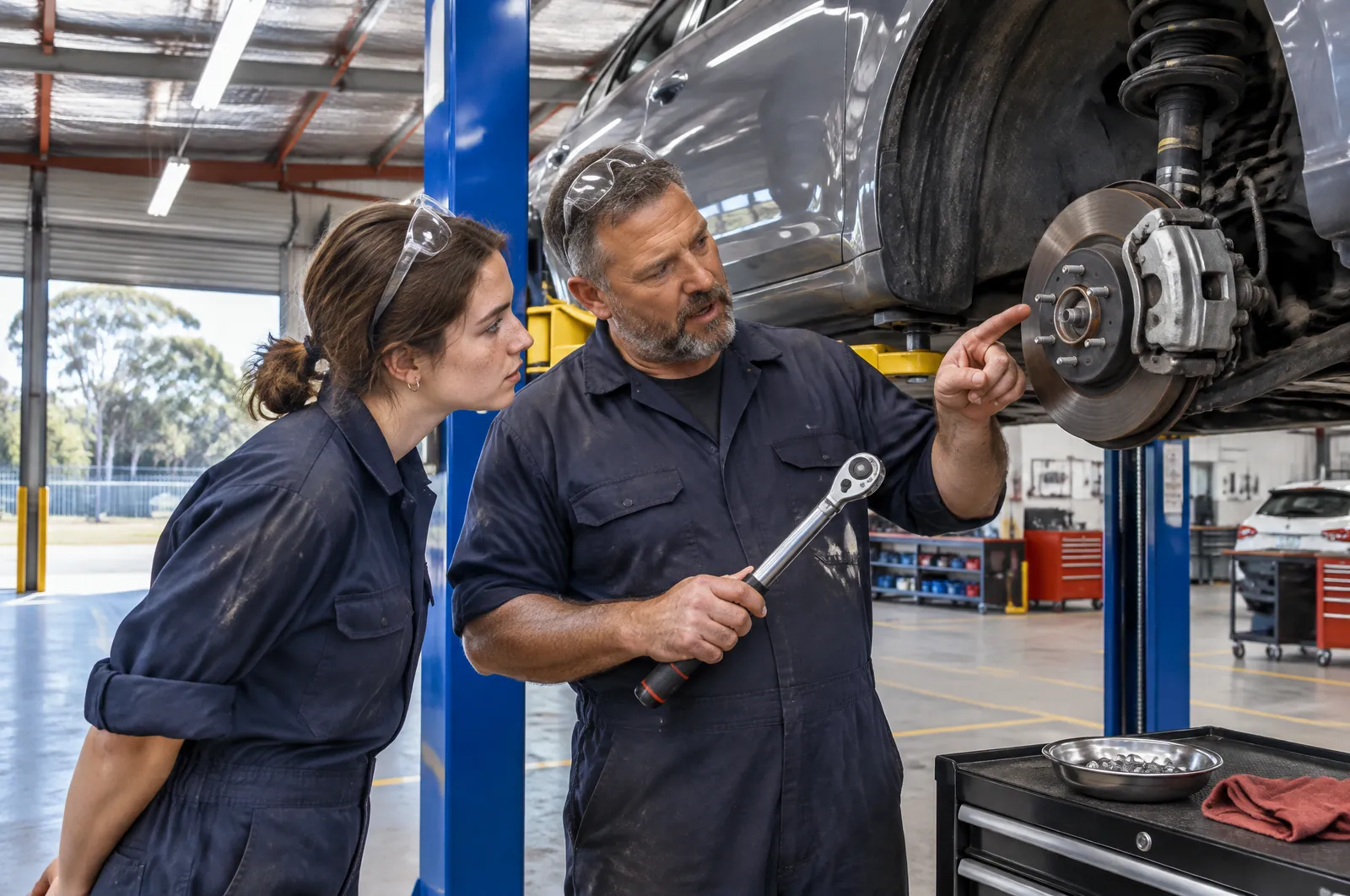
Each unit of competency also has assessment requirements: performance evidence, knowledge evidence and assessment conditions. In automotive units the conditions often call for a workplace or a close simulation of one, with the tools, equipment and technical information a working shop would have. Read them before you plan your workshop and your assessment.
Checking currency and transition
Training products are updated, and a current qualification can be superseded by a new release. Before you enrol learners or buy resources, open the qualification on training.gov.au and check its status, its release and whether a newer version has replaced it. In current codes, the last two digits usually show the year of release.
When a qualification you deliver is superseded, ASQA's rules on transition apply to your learners. Check ASQA's guidance for what you must do and by when, and check that your resources match the version your learners are enrolled in.
What each resource format contains
These are the formats the store lists for AUR qualifications, described as the store describes them.
- Assessment Kit. Assessment pack (student), trainer assessment pack (marking guide), mapping for each unit of competency and assessment record tools.
- Learner Resources. Learner guide, PowerPoint presentation, session plan, classroom activities and self study guide.
- Learning and Assessment Kit. Both of the above together.
- RPL Kit. Recognition tools written for each qualification, from the application form and information booklet through self assessment, competency conversation, demonstration and observation, to a third party kit.
- LLND Kit. Language, literacy, numeracy and digital assessment and support tools aligned with the Australian Core Skills Framework.
- Training and Assessment Strategy. A template to customise to your learner cohort and your organisation.
- Vocational Placement Kit. A kit for assessing practical skills in a simulated environment or an actual workplace.
Documents are supplied in Microsoft Word, so you can customise them. Unlimited student licence: deliver to unlimited students within the purchased licence conditions.
What your RTO still has to do
A resource is a starting point, not a finished assessment system. Under the Standards for RTOs 2025 your organisation stays responsible for its training and assessment. Whatever you buy, plan to:
- contextualise the tools for your learners, your vehicles and equipment, and your delivery mode
- check that your workshop or placement can meet each unit's assessment conditions
- review the tools before use and validate them through your own process, as Standard 1.5 of the Outcome Standards expects
- keep a record of the changes you make and why
- check currency on training.gov.au before each intake
Samples are available on request, so your compliance lead and your trainers can read the actual documents before you commit. You can also try the 32 interactive SCORM samples.